


Antibody-Drug-Conjugates (ADC) have emerged as an efficient technology to deliver cytotoxic drugs into cancerogenic cells. The mechanism is based on an antigen-mediated uptake of a cytotoxic drug conjugated antigen via clathrin-mediated endocytosis and release of the drug after lysosomal cleavage to its intracellular target.
With 14 ADCs currently approved worldwide, ADCs have proven their therapeutic value in increasing efficacy and reducing toxicity especially in oncology. Recent research however has shown that the cytotoxic drug mechanisms, drug-antibody ratio, antibody penetration and processing, resistance and off-target drug effects of ADCs can be further enhanced.
This continues to drive high investments into ADC research and development increasing the demand for external partnerships and expert support.
Translating the drug design concept of an ADC into a final product remains a major challenge. The cytotoxic small molecule drug can covalently bind to the monoclonal antibody at multiple sites during the synthesis leading to a heterogeneous mixture of unfavorable ADC products. In order to move into the preclinical and early clinical phase the exposure-response relationship for efficacy and safety must be established. For IND/IMPD filing, a bioanalytical strategy tailored to each of the ADC components is required by the regulatory authorities.
Authors: Melloney Dröge, PhD, Francesco Bonardi, PhD
This whitepaper has been written with the contribution of Byondis B.V.
Antibody-Drug-Conjugates (ADC) have emerged as an efficient technology to deliver cytotoxic drugs into cancerogenic cells. The mechanism is based on an antigen-mediated uptake of a cytotoxic drug conjugated antigen via clathrin-mediated endocytosis and release of the drug after lysosomal cleavage to its intracellular target.
With 14 ADCs currently approved worldwide, ADCs have proven their therapeutic value in increasing efficacy and reducing toxicity especially in oncology [1]. Recent research however has shown that the cytotoxic drug mechanisms, drug-antibody ratio, antibody penetration and processing, resistance and off-target drug effects of ADCs can be further enhanced [2].
This continues to drive high investments into ADC research and development increasing the demand for external partnerships and expert support.
ADC are complex molecules consisting of a target-specific antibody, a cytotoxic drug (payload) and a covalent linker connecting the drug to the antibody. ADCs have a narrow therapeutic window, and their effectiveness may be compromised by undesired toxicity based on metabolic instability, poor pharmacokinetics, or off-target effects [3]. This risk can be mitigated by careful characterization, as well as in-vitro and in-vivo assessment prior to first in human studies, to predict the impact of their inherent heterogeneity and potential anti-drug antibodies on their pharmacokinetics (PK), pharmacodynamics (PD), safety, and efficacy [4]. To ensure efficacy and minimise toxicity outside the targeted tissue, the linkage and amount of the drug molecules bound to the antibody and the drug-antibody ratio (DAR) must be optimized and reproducibly manufactured. Robust analytical characterization and monitoring methods during the entire drug development process are essential in order to achieve the targeted product performance and the required regulatory documentation for IND/IMPD and NDA filing.
The R&D challenge
Translating the drug design concept of an ADC into a final product remains a major challenge. The cytotoxic small molecule drug can covalently bind to the monoclonal antibody at multiple sites during the synthesis leading to a heterogeneous mixture of unfavorable ADC products. In order to move into the preclinical and early clinical phase the exposure-response relationship for efficacy and safety must be established. For IND/IMPD filing, a bioanalytical strategy tailored to each of the ADC components is required by the regulatory authorities.
In contrast to a typical small molecule, ADCs consist of multiple elements which need to be identified during regulated bioanalysis: the total antibody content, the antibody conjugated with at least one payload, the free payload, and the total conjugated drug [5]. ADCs are also known to induce anti-drug antibodies (ADA) against structural parts of the ADC. ADAs can lead to neutralization and impact the efficacy of the ADC. It is therefore recommended that their presence is investigated early on in development [6]. The evaluation of immunogenic responses and the formation of ADAs in the preclinical and clinical phases remains a major challenge that requires a strategic and experience-based approach [7].
Developing the ADC specific bioanalytical strategy
The design of the bioanalytical approach must take into account the determination of the ADC with regard to the antibody, fully and partially conjugated antibody, off-target conjugated antibody, unconjugated drug, drug-conjugate metabolic stability, pharmacokinetics, and potential immunogenicity. In particular, detection of ADCs and their components in biological fluids may be challenging due to the complexity of the matrix.
Standard analytical methods do not exist for the bioanalytical characterization of the proteinic, chemical, and immunogenic components. The bioanalytical strategy of choice should therefore be unbiased by the bioanalytical platform and determined by a case-by-case scientific approach. During the design of the bioanalytical method the availability of specific reagents and equipment should be considered. (Figure 1).
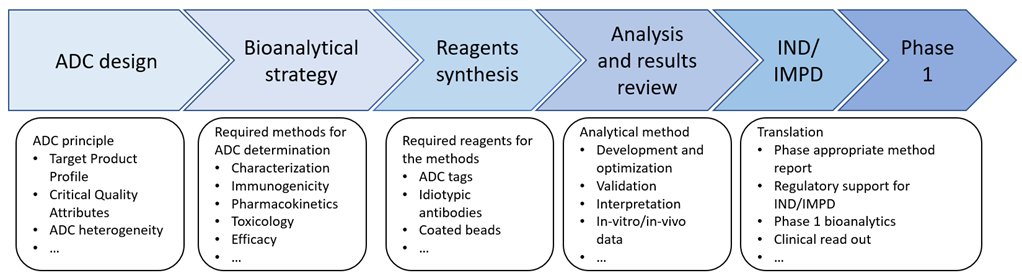
Figure 1: Implementation of an analytical strategy during the transition from the pre-clinical to the clinical stage
Major principles of ADC assay methods
Selecting the right technology for the right target requires a high degree of expertise and in-house capabilities.
Liquid Chromatography (LC) is a versatile separation technology platform that can be operated in different ways to separate chemical and/or biological components from a variety of samples. Due to its versatility LC has emerged as the separation method of choice for ADCs in the growing field of biotechnological therapeutics. In particular when coupled to a Mass Spectrometer (LC-MS/MS), the separated components can be detected qualitatively and quantitatively with high precision and selectivity[8]. LC-MS/MS has proven capable of discriminating between two different co-administrated therapeutic antibodies in human serum [9].
The Ligand Binding Assay (LBA) platform is a detection method based on the formation of a complex between a receptor and a ligand. The receptor and/or one or more ligands are tagged or labeled to qualify and quantify the substrate of interest by measuring the intensity of the signal emitted by the complex. The most common LBAs are the enzyme-linked immunosorbent assay (ELISA) and electrochemiluminescence (ECL) or AlphaLisa, which can also be used for evaluation of immunogenicity and the formation of antidrug antibodies (ADA)[10].
When the use of LBAs is hampered by the lack of critical reagents or selectivity issues hybrid LC-MS/MS can be used as an alternative approach. The combination of immunoaffinity purification and LC-MS/MS (also referred to as immunocapture-liquid chromatography) allows the detection of ADCs in both in-vitro and in-vivo samples [11]. The approach consists in separating the targeted antibodies by pulldown followed by a proteolytic step and quantification of antibody specific protein sequences by LC-MS/MS. Hybrid LC-MS/MS provides quantitative information on the total antibody, total ADC, or total payload depending on whether the reagents used in the purification step target the antibody or the payload.
The role of reagents for ADC analytics
Analytical procedures for ADCs require highly specific and highly sensitive reagents compared to standard analysis. These reagents range from method specific e.g., biotin or ruthenium of the conjugated and unconjugated anti-body to the generation of anti-drug antibodies and anti-idiotype antibodies. The anti-idiotype antibodies which target the variable regions of antibodies must be identified and produced in sufficient quantity for each development program. Anti-idiotype antibodies represent the antigenic region specific for the antibody and are required for ADC selective PK and immunogenicity (ADA) analysis. These can be produced or in-vitro, for example by phage display of antibody libraries[6], or by animal immunisation and amplification in-vitro. Consequently, reagent manufacturing is a time critical step in bioanalytical development for ADC development and characterization.
Read our related whitepaper: Prevent undesired immunogenicity from becoming the barrier for innovative biotherapeutics
The importance of regulatory compliance
Following selection of an ADC candidate for the preclinical phase all investigations and data must take into account the requirements for IND/IMPD submission, approval, and the first clinical study. The European Medicines Agency (EMA) and the Food and Drug Administration (FDA) have provided regulatory expectations for antibody therapeutic entities and recently additional guidelines have been drafted emphasising the importance of PK and immunogenicity assessments [16]. These requirements are part of the IND/IMPD application therefore the bioanalytical methods used must be sufficiently specific and validated for the scientific questions and fully documented according to these guidelines.
Case study
An innovative approach in ADC development to achieve better homogeneity and target tissue delivery is being pursued by Byondis. One of their lead compounds is a novel ADC developed by their unique platform technology utilizing a highly potent duocarmycin linker-drug (vc-seco-DUBA) for site specific conjugation, and hydrophobic linker-drug shielding to maintain its cytotoxic potency. After confirming the site-specific ADC conjugation versus random conjugation with their platform and the expected increase in efficacy in a xenograft mouse model[17], Ardena was requested to provide timely bioanalytical services to establish the pharmacokinetic profile of the ADC in the phase 1 clinical trial. A strategic plan was developed, coordinated by a dedicated project manager, for the bioanalysis in blood to quantify the total antibody, the conjugated antibody, and the payload concentration, and to determine potential ADAs and their impact on PK, PD, and immunogenic reactions. Due to the very low concentration of the ADC and the payload, the sensitivity and selectivity of the method needed to be able to determine qualitatively and quantitatively at pg/mL concentrations. Each assay format and analytical platform also required product specific reagents.
For the determination of the antibody and conjugated antibody, reagents for the LBA with high specificity to the antibody of the ADC were required. Heavy chain only antibodies (HcAbs) derived from camelids were used due to their immune specificity of the distinctive variable domain (VHH)[18]. Llamas were immunized with the naked ADC antibody and the VHH mRNA was collected from peripheral whole blood to obtain high quality RNA using Reverse Transcriptase Polymer Chain Reaction (RT-PCR). The RNA was then incorporated into phage display vectors in order to express the antibody and amplify the VHH of interest in E. coli [19]. After purification of the anti-idiotype VHH antibody (AIDA) against the ADC, the AIDA was labeled with biotin and Horseradish Peroxidase (HRP) for LBAs. In addition, magnetic beads covered with immune-capturing moiety for the ADC were also manufactured. These reagents were used to determine the total and conjugated antibody concentration by a sandwich ELISA streptavidin coated microtiter plate pre-coated with the AIDA and ADC respectively. The determination of the payload in pharmacokinetic studies is challenging due to the very low concentration, metabolites, and cleavage site (e.g. payload-linker-amino acid artefacts).
A highly sensitive LC-MS/MS method was developed to determine the payload and validated based on 8 calibration points in the range of 1.00 – 100 pg/mL. The payload and internal standard were isolated by liquid-liquid extraction from K2-EDTA plasma and separated by ultra-performance-liquid-chromatography (UPLC) followed by tandem mass spectroscopy (MS/MS). The calibration curve obtained for the payload showed a linear correlation across the expected in-vivo concentration in human plasma providing the required sensitivity, precision, and recovery (Figure 2).
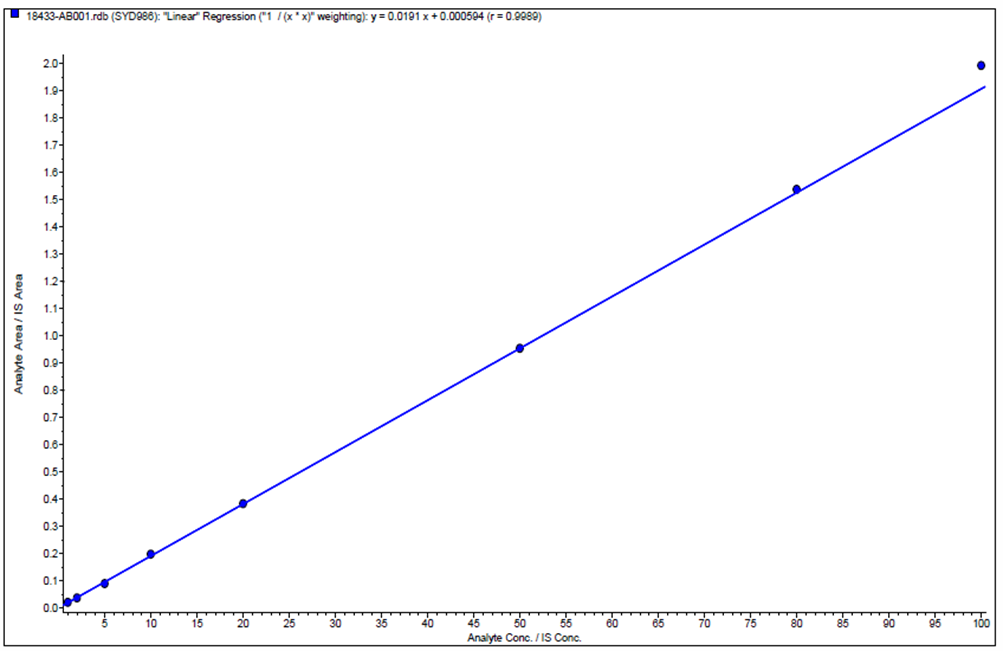
Figure 2: Calibration curve for the payload in K2-EDTA plasma across the plasma concentration of 1.00 – 100 pg/mL
A sandwich ELISA was used to validate the conjugated antibody in human K2-EDTA plasma across 12 calibration points to cover the in-vivo concentration of 2.00 – 1250 ng/mL. The concentration of the total antibody in human K2-EDTA plasma was validated across 12 calibration points ranging from 10 – 1500 ng/mL using a sequential sandwich ELISA. The ELISA methods developed used different biotinylated capture antibodies coated on the surface of a streptavidin coated microtiter plate. After adding the substrate sample for a specific time under optimized conditions the specific anti-idiotype antibodies labeled with HRP were added to produce the concentration dependent signal. The bioassays were qualified for their selectivity, specificity, precision, and accuracy. In table 1 the validation results of the conjugated antibody determination are shown.
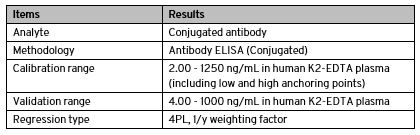
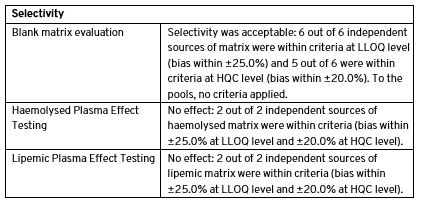
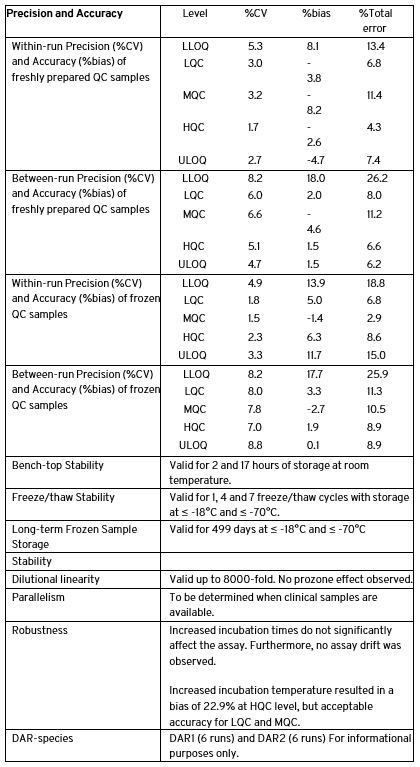
Table 1: Validation of the conjugated antibody concentration measurement in human K2-EDTA plasma across the expected in-vivo concentration for the pharmacokinetic study in humans
Alpha technology was used for the immunogenicity assessment due to its sensitivity when measuring ADAs in complex biologic fluids like plasma. Acceptor beads coated with the ADC and biotinylated ADC were produced for the assay. These reagents form specific complexes with the ADA and through excitation of the donor beads the emitted light signal of 615 nm is proportional to the amount of ADA present, and is quantified by running a standard curve[20].
Methods were developed and validated with ELISA, Alpha Technology and LC-MS/MS assays in the required ng/ml range according to the defined bioanalytical strategy and agreed timelines. The validation according to GLP and GCP requirements included regression type, selectivity, accuracy and precision, stability, dilution linearity, and robustness. A comprehensive documentation of the (bio)analytical methods relevant for the IND/IMPD filing was provided.
Conclusion
Targeted delivery of cytotoxic drugs by ADCs have fulfilled their potential and become part of the clinical repertoire for the treatment of cancer. Considering the potential of ADC application to the numerous unmet clinical needs, in-vitro and in-vivo bioanalytical methods are required to characterize the ADCs as well as to predict and finally prove the safety and efficacy during the translation from the pre-clinical to the clinical phase. The complexity and intrinsic heterogeneity of ADCs, their complex in-vivo distribution, metabolism and drug release patterns present challenges in bioanalytical characterisation, in-vivo prediction, and monitoring. Ardena’s multidisciplinary experts have designed a development program specific bioanalytical strategy which considers the required performance criteria for the individual analytical targets within the overall characterisation requirements and bioanalytical procedural framework. The broad services platform and scientific expertise at Ardena allows for the development of a bioanalytical strategy tailored to the properties of the therapeutic drug and therefore of the Sponsor. Ardena involves the Sponsor in every step of the process so that the methods can be customised to the smallest detail.
References
[1] Z. Fu, S. Li, S. Han, C. Shi, and Y. Zhang, “Antibody drug conjugate: the ‘biological missile’ for targeted cancer therapy,” Signal Transduction and Targeted Therapy, vol. 7, no. 1. Springer Nature, Dec. 01, 2022. doi: 10.1038/s41392-022-00947-7.
[2] L. N. Tumey, “An Overview of the Current ADC Discovery Landscape,” in Antibody-Drug Conjugates, 2078th ed., vol. 2078, Tumey LN, Ed. Humana Press Inc, 2020, pp. 1–22. doi: 10.1007/978-1-4939-9929-3_1.
[3] H. Donaghy, “Effects of antibody, drug and linker on the preclinical and clinical toxicities of antibody-drug conjugates,” mAbs, vol. 8, no. 4. Taylor and Francis Inc., pp. 659–671, May 18, 2016. doi: 10.1080/19420862.2016.1156829.
[4] Y. Anami et al., “Homogeneity of antibody-drug conjugates critically impacts the therapeutic efficacy in brain tumors,” Cell Rep, vol. 39, no. 8, May 2022, doi: 10.1016/j.celrep.2022.110839.
[5] B. Gorovits et al., “Bioanalysis of antibody-drug conjugates: American Association of Pharmaceutical Scientists Antibody-Drug Conjugate Working Group position paper,” Bioanalysis, vol. 5, no. 9, pp. 997–1006, May 2013, doi: 10.4155/bio.13.38.
[6] S. Harth and C. Frisch, “Recombinant Anti-idiotypic Antibodies in Ligand Binding Assays for Antibody Drug Development,” in Methods in Molecular Biology, vol. 2261, Humana Press Inc., 2021, pp. 291–306. doi: 10.1007/978-1-0716-1186-9_18.
[7] G. Shankar et al., “Recommendations for the validation of immunoassays used for detection of host antibodies against biotechnology products,” Journal of Pharmaceutical and Biomedical Analysis, vol. 48, no. 5. pp. 1267–1281, Dec. 15, 2008. doi: 10.1016/j.jpba.2008.09.020.
[8] X. Zhu, S. Huo, C. Xue, B. An, and J. Qu, “Current LC-MS-based strategies for characterization and quantification of antibody-drug conjugates,” Journal of Pharmaceutical Analysis, vol. 10, no. 3. Xi’an Jiaotong University, pp. 209–220, Jun. 01, 2020. doi: 10.1016/j.jpha.2020.05.008.
[9] S. Schokker et al., “Development and validation of an LC-MS/MS method for simultaneous quantification of co-administered trastuzumab and pertuzumab” MAbs, 2020 Jan-Dec;12(1):1795492. doi: 10.1080/19420862.2020.1795492
[10] T. Wyant, L. Yang, and M. Rosario, “Comparison of the ELISA and ECL Assay for Vedolizumab Anti-drug Antibodies: Assessing the Impact on Pharmacokinetics and Safety Outcomes of the Phase 3 GEMINI Trials,” AAPS Journal, vol. 23, no. 1, Jan. 2021, doi: 10.1208/s12248-020-00518-0.
[11] Y. Huang, S. Mou, Y. Wang, R. Mu, M. Liang, and A. I. Rosenbaum, “Characterization of Antibody-Drug Conjugate Pharmacokinetics and in Vivo Biotransformation Using Quantitative Intact LC-HRMS and Surrogate Analyte LC-MRM,” Anal Chem, vol. 93, no. 15, pp. 6135–6144, Apr. 2021, doi: 10.1021/acs.analchem.0c05376.
[12] Fda and Cder, “Bioanalytical Method Validation Guidance for Industry Biopharmaceutics Bioanalytical Method Validation Guidance for Industry Biopharmaceutics Contains Nonbinding Recommendations,” 2018. [Online]. Available: http://www.fda.gov/Drugs/GuidanceComplianceRegulatoryInformation/Guidances/default.htmand/orhttp://www.fda.gov/AnimalVeterinary/GuidanceComplianceEnforcement/GuidanceforIndustry/default.htm
[13] EMA, “Committee for Medicinal Products for Human Use (CHMP) Guideline on bioanalytical method validation,” 2011. [Online]. Available: www.ema.europa.eu/contact
[14] Fda and Cder, “Immunogenicity Testing of Therapeutic Protein Products —Developing and Validating Assays for Anti-Drug Antibody Detection Guidance for Industry,” 2019. [Online]. Available: https://www.fda.gov/Drugs/GuidanceComplianceRegulatoryInformation/Guidances/default.htmand/orhttps://www.fda.gov/BiologicsBloodVaccines/GuidanceComplianceRegulatoryInformation/Guidances/default.htm
[15] EMA, “Committee for Medicinal Products for Human Use (CHMP) Guideline on Immunogenicity assessment of therapeutic proteins,” 2017. [Online]. Available: www.ema.europa.eu/contact
[16] FDA, “Clinical Pharmacology Considerations for Antibody-Drug Conjugates Guidance for Industry DRAFT GUIDANCE,” 2022. [Online]. Available: https://www.fda.gov/vaccines-blood-biologics/guidance-compliance-regulatory-information-biologics/biologics-guidances
[17] R. G. E. Coumans et al., “A Platform for the Generation of Site-Specific Antibody-Drug Conjugates That Allows for Selective Reduction of Engineered Cysteines,” Bioconjug Chem, vol. 31, no. 9, pp. 2136–2146, Sep. 2020, doi: 10.1021/acs.bioconjchem.0c00337.
[18] G. Gonzalez-Sapienza, M. A. Rossotti, and S. Tabares-da Rosa, “Single-domain antibodies as versatile affinity reagents for analytical and diagnostic applications,” Frontiers in Immunology, vol. 8, no. AUG. Frontiers Media S.A., Aug. 21, 2017. doi: 10.3389/fimmu.2017.00977.
[19] C. M. Hammers and J. R. Stanley, “Antibody Phage Display: Technique and Applications,” 2014, doi: 10.1038/jid.
[20] Z. T. F. Yu et al., “Rapid, automated, parallel quantitative immunoassays using highly integrated microfluidics and AlphaLISA,” Sci Rep, vol. 5, Jun. 2015, doi: 10.1038/srep11339.