


We know bioavailability
Unlocking oral bioavailability for the molecules that need it most.
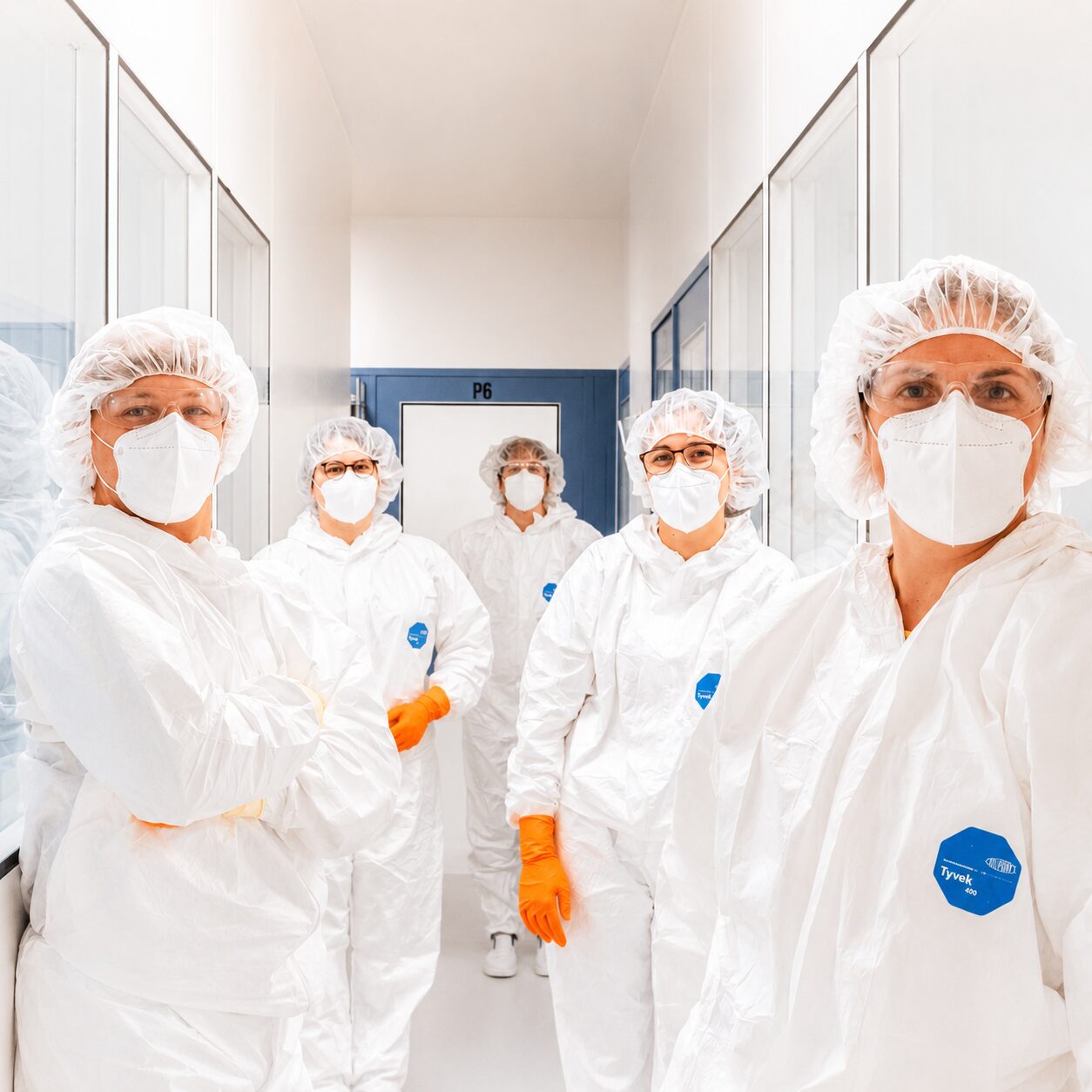
Unlocking oral bioavailability for the molecules that need it most.
We offer four proven platforms: Spray Drying, Hot Melt Extrusion, Nanosuspensions, and Lipid Formulations. We screen them in parallel, select on science, and support development from first feasibility through commercial manufacturing — all under one roof.
More than 70% of drug candidates suffer from poor aqueous solubility. For BCS Class II and IV compounds, that means low and variable bioavailability, unpredictable pharmacokinetics, and formulation challenges that derail programs. The answer is not guesswork. It is selecting the right enabling technology early, deliberately, and with the right data behind the decision.
OUR FOUR ENABLING PLATFORMS
01
Spray Drying (SD)
Amorphous Solid Dispersions for Maximum Solubility Enhancement
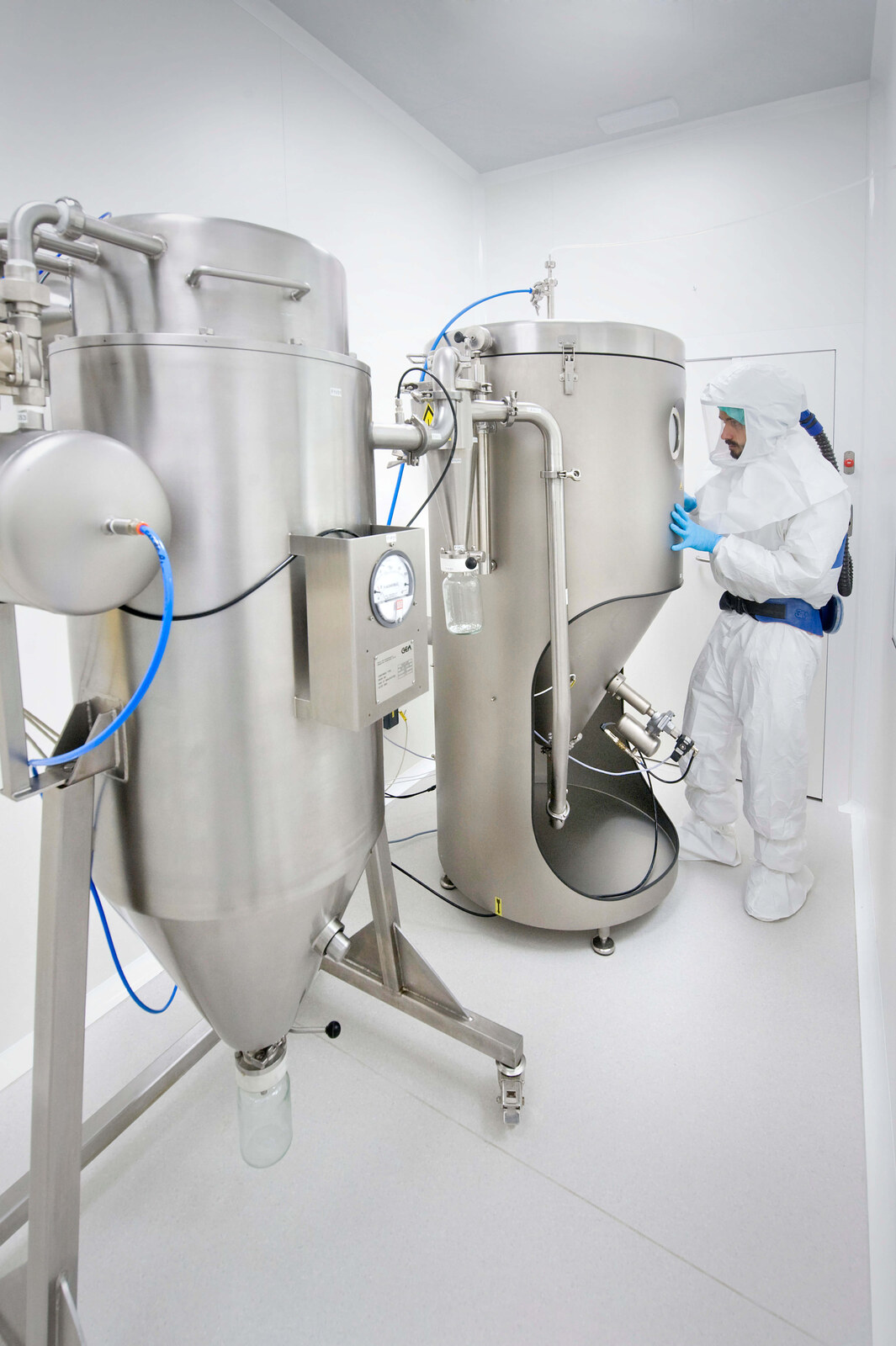
Spray drying converts crystalline APIs into amorphous solid dispersions (ASDs) by co-dissolving the drug and a stabilizing polymer in a solvent system and rapidly evaporating the solvent to lock both components into a single amorphous phase. The result is a high-surface-area powder with significantly improved apparent solubility and dissolution rate.
Spray drying is one of the most broadly applicable ASD technologies, with a strong regulatory track record and proven scalability from milligram-scale screening to commercial manufacturing.
Best suited to: poorly soluble APIs compatible with organic solvent processing, thermally sensitive compounds unsuitable for melt-based processing, and programs requiring fine control of particle size and morphology.
02
Hot Melt Extrusion (HME)
Solvent-Free ASD Technology with Robust Scalability
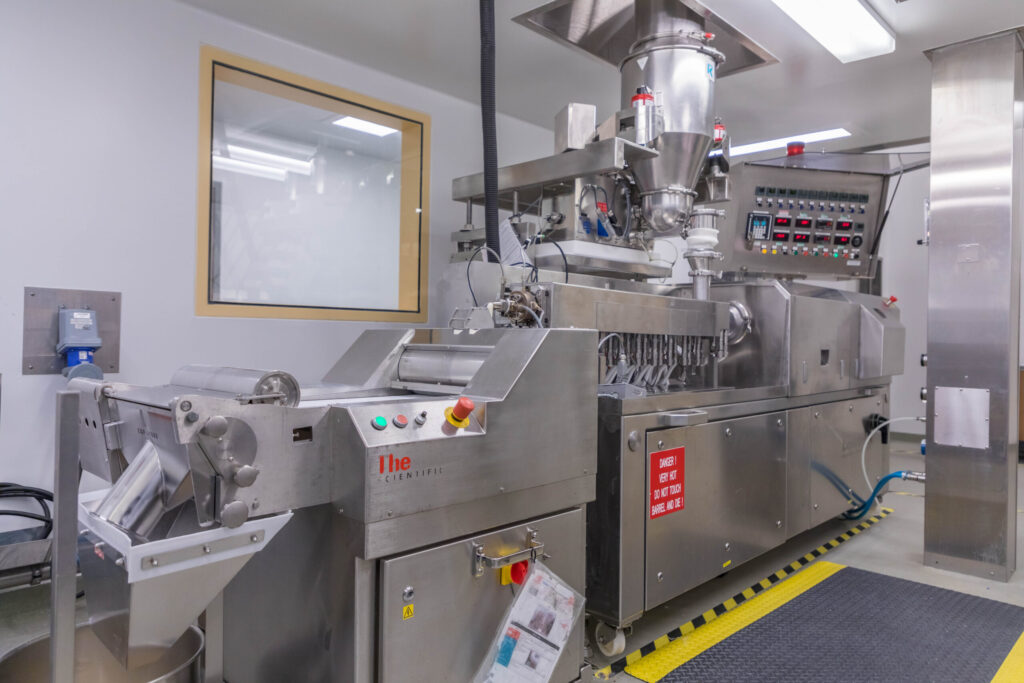
Hot melt extrusion produces amorphous solid dispersions through a fusion-based process: API and polymer are blended, melted, and mixed under controlled temperature and mechanical energy in a twin-screw extruder — no solvents required. The dense, uniform extrudate is milled and processed into the final oral dosage form with fewer downstream steps than solvent-based ASD technologies.
HME is a continuous, inherently scalable process with a lean manufacturing footprint, making it one of the most cost-efficient routes to commercial ASD production.
Best suited to: thermally stable APIs with good polymer miscibility, programs prioritizing solvent-free and sustainable manufacturing, and molecules where streamlined downstream processing and commercial scalability are key requirements.
03
Nanosuspensions
Particle Size Reduction to Boost Dissolution Rate
Nanosuspensions reduce the API to the nanometer range (typically 100–500 nm) using top-down wet bead milling — dramatically increasing the surface area available for dissolution without converting the drug to its amorphous form. The crystalline API is stabilized in an aqueous suspension using polymers and surfactants, providing a physically stable formulation suitable for both preclinical dosing and oral clinical supply.
Nanosuspensions are particularly well-suited to high-dose compounds and early-phase programs requiring a simple, dose-flexible formulation that can be advanced rapidly to first-in-human studies.
Best suited to: dissolution-rate-limited BCS/DCS Class IIa compounds; high-dose APIs; programs requiring a fast, flexible FIH formulation without the complexity of a solid dosage form.

04
Lipid Formulations
Solubilization-Driven Bioavailability Enhancement
Lipid-based drug delivery systems present the API pre-dissolved in a vehicle of oils, surfactants, and co-solvents that self-emulsifies upon contact with gastrointestinal fluids — maintaining the drug in a solubilized, absorbable state throughout GI transit. For highly lipophilic molecules, this approach can deliver bioavailability improvements beyond the reach of solid dispersion technologies, and may additionally enable lymphatic absorption to reduce first-pass metabolism.
At Ardena, lipid formulations are delivered in two clinical formats — liquid in vials for flexible preclinical and early FIH dosing, and liquid-filled hard capsules for patient-ready oral solid dose supply — both developed and manufactured at a single site.
Best suited to: highly lipophilic APIs (logP > 3) with good solubility in lipid excipients; compounds with pronounced food effects; programs targeting lymphatic absorption or rapid FIH entry.
TECHNOLOGY SELECTION — OUR APPROACH
We select the right technology for your molecule. On data, not default.
No two poorly soluble compounds are the same. The optimal enabling strategy depends on the physicochemical fingerprint of the API — its thermal stability, logP, solubility in solvents and lipids, propensity to recrystallize, and dose requirements — alongside the clinical development timeline and long-term commercial strategy.
We apply a structured, science-driven technology selection process that combines:
Physicochemical profiling
full characterization of the API's key properties before any formulation commitment is made
In-silico modeling
thermodynamic and machine-learning tools that predict API–excipient compatibility and guide technology selection from chemical structure alone
Parallel screening
when the optimal technology is unclear, we screen multiple platforms in parallel to generate comparative data for technology selection
Scalability planning
development decisions are made with commercial manufacturing in mind from day one, avoiding late-stage reformulation
The result is a faster, lower-risk path to the clinic — with a formulation strategy that holds all the way to commercial supply.
Related resources
Our team members share their deep, scientific understanding and insights into bioavailability enhancement.
Small Molecule Development
End-to-end development for small molecules with complex profiles — poorly soluble compounds, highly potent APIs, controlled substances, and challenging physicochemical characteristics. Our scientists know where the problems hide and how to get ahead of them. From first formulation to GMP batch, your program stays in expert hands.
Discuss Your ProgramLarge Molecule Development
Sterile drug product development and manufacturing for biologics and complex parenteral formulations. Our teams are experienced with the sensitivity and precision these molecules demand – from formulation design through aseptic fill-finish and lyophilization. One team that stays with your program.
Discuss Your ProgramNanomedicine Development
Ardena operates one of Europe's broadest nanomedicine platforms – lipid nanoparticles, polymeric nanoparticles, liposomes, nanosuspensions, and beyond. From building block synthesis through GMP production and regulatory submission, we cover the full development arc for nanoparticle-based therapeutics.
Discuss Your Program