


Delivery technology no longer just supports new therapies; it is one of the main things that make them possible. That was the shared conclusion of the final panel at Ardena’s Nanomedicine and Bioconjugation Symposium, held on September 15 and 16, 2026, in Oss, the Netherlands. Over two days, clinical researchers, academics, bioprocess engineers and bioanalytical experts looked at what clinical translation asks of a nanomedicine or a bioconjugate today: a carrier built for its cargo, clinical data that convince investors, a process that scales, and methods that show what is really in the vial.
The Pharma Navigator has published a full write-up of the talks. Below, we group the key takeaways by theme. The program also included guided tours of the facility and pilot plant behind Ardena’s nanomedicine services.
Teaching the immune system to tolerate: liver-targeted nanoparticles
Liver-targeted nanoparticles are designed to suppress specific harmful immune responses without broadly suppressing the immune system.
Dr. Christian Schröter, CEO and Managing Director of Topas Therapeutics, opened the symposium. Topas targets liver sinusoidal endothelial cells (LSECs), the cells lining the liver’s small blood vessels. They filter debris out of the circulation and help the body accept harmless antigens. Peptides delivered on their own do not reach these cells. Topas therefore built 25 nm particles that carry disease-specific peptides on their surface, with a negatively charged polymer coating that imitates fragments of red blood cells. Ardena supports Topas with CMC development and GMP manufacturing of these particle conjugates.
In celiac disease, the lead candidate TPM502 was tested in a randomized, double-blind, placebo-controlled study. Patients received two 30-minute intravenous infusions, followed by a gluten challenge. The higher the dose, the further inflammatory cytokines fell; at the top dose, interleukin-2 was a thousandfold lower. Gastrointestinal symptoms also improved with dose, and the safety profile was clean. Schröter called the results a very strong signal for the next clinical trial.
Because LSECs present antigens in the same way whatever the disease, the platform is modular. Swapping the surface peptide points it at another autoimmune condition, such as multiple sclerosis or type 1 diabetes.
Matching the carrier to the cargo
The more complex the drug, the more its carrier has to be designed around it rather than taken off the shelf.
María José Alonso, Professor of Pharmaceutical Technology at the University of Santiago de Compostela and founder of Libera Bio, made this point, contrasting carriers tailored to their cargo with universal polymers such as PLGA. For antibodies, the challenge is density: Alonso described a platform that fits 50 to 100 monoclonal antibodies in each 100 nm particle, so they can reach targets inside cells, such as mutated KRAS. In preclinical work, the particles got out of the endosome, and the anti-KRAS antibodies they released still worked and slowed tumor growth. For RNA, the challenge is keeping the molecule intact. Here Alonso presented lipid-polymer complexes without PEG or cholesterol, which are more elastic than standard LNPs. Injected into the brain, LNPs tend to stay at the injection site, while these more elastic particles spread through brain tissue. Small changes in composition let them selectively transfect either neurons or microglial cells.
Two talks showed what lipid micellar platforms can do for drugs that are hard to deliver on their own. Dr. Morten Just Petersen, Chief Development Officer of MonTa Biosciences, presented the bench-to-bedside development of MBS8 (1V270), a therapy meant for advanced cancers that resist treatment. Its active ingredient is a small-molecule TLR7 agonist. Given freely, such agonists are insoluble and cause inflammation throughout the body. In MBS8, the agonist and DSPE-PEG 2000 form micelles only 13 to 14 nm across. Petersen contrasted them with liposomes of 100 to 120 nm, which provoke a much stronger immune reaction. The micelle also shields the drug from breakdown in water, so the formulation stays stable for years. MonTa grew the process twentyfold, from 1 L non-GMP batches to 20 L, to supply GLP toxicology studies and the clinic. Dose escalation in 76 patients with a range of solid tumors showed that the drug reaches its target in immune cells in the blood, and the program has expanded to cutaneous and uveal melanoma that no longer responds to checkpoint inhibitors. Petersen’s advice for developers: run early dose-finding studies in the same animal strains and facilities planned for GLP testing. In MonTa’s case, one rat strain tolerated lower doses than earlier studies had suggested.
Dr. Glenn Meyer, CMC Product Development at Peptinovo Biopharma, presented a synthetic version of high-density lipoprotein (HDL). Each Peptide-Amphiphile Lipid Micelle (PALM) particle is 8 to 12 nm and assembled from a 20-amino-acid peptide modeled on the part of apolipoprotein A-I that binds its receptor. The particles deliver chemotherapy in prodrug form to cancer cells through the route those cells use to take up cholesterol. Prodrugs made extremely water-repellent stay locked in the particle core. Loaded with paclitaxel (PNB-281) and tested by the NIH Nanotechnology Characterization Laboratory, the particles stayed in the plasma with a 14-day half-life and did not leak their drug early. In GLP toxicology studies, rats had more drug in their plasma, yet showed neither liver toxicity nor peripheral neuropathy. Peptinovo chose Ardena to manufacture its PALM-based cancer nanotherapy for its first human trials.
Reaching the right tumors and the right patients
In cancer, a nanomedicine works best when it hits a target unique to tumor cells and is given to patients whose tumors actually take it up.
Dr. Zdravka Medarova, co-founder and Chief Scientific Officer of TransCode Therapeutics, presented TTX-MC138. It targets microRNA-10b, which is abundant in metastatic cells but almost undetectable in healthy adult tissue. Inhibiting it makes tumor cells less mobile, changes the signals that keep them alive and lowers PD-L1. The carrier is a dextran-coated iron oxide nanoparticle with a small core and a 24-hour plasma half-life, which lets it leave leaky tumor blood vessels, while the dextran shell drives uptake into cells. In patients, over 98% of the oligonucleotide was still attached to the particles a day after injection. In a first study in 16 patients with advanced solid tumors, there were no dose-limiting toxicities, disease stabilized in 84% of patients, and more than 60% of patients were free of progression at 12 months. TransCode is now enrolling a study in colorectal cancer that measures whether circulating tumor DNA disappears.
Prof. Dr. Twan Lammers of RWTH Aachen University Clinic questioned how much a figure from earlier meta-analyses really means: a median of about 0.7% of an injected nanomedicine dose reaches the tumor. Lammers argued that the figure is not a meaningful measure: only about 0.0001% of a free drug reaches the tumor, while 1% is more than enough for a good response. Imaging studies found liposomes or micelles building up in the tumors of as many as 90% of patients. The real problem is that accumulation varies widely between patients and within the same patient. Lammers described two ways to select patients. The first uses iron oxide nanoparticles already approved as MRI contrast agents to show, before treatment, how much a tumor takes up, ahead of a nanomedicine such as liposomal irinotecan. Patients whose uptake is above the median respond significantly better. The second uses machine learning on biopsies taken before treatment: five features linked to blood vessels, plus the number of macrophages, track closely with how many particles arrive and how well patients respond.
Site-specific conjugation and the next generation of ADCs
In bioconjugation, controlling where payloads attach and how many there are has become central to ADC design.
Independent expert Dr. Sander van Berkel gave an overview of how antibody-drug conjugates (ADCs) have evolved and named five parameters their success depends on: target selection, site-specific conjugation, linker dynamics, polarity balance and drug-to-antibody ratio (DAR). Of these, DAR is critical, and the field has moved from heterogeneous attachment to lysines toward chemo-enzymatic methods that attach payloads at defined sites. One example is IBI343, a Claudin 18.2-targeting ADC from Innovent built with Synaffix’s GlycoConnect technology. The antibody’s native Fc glycans are trimmed, fitted with azido-sugars and joined by copper-free click chemistry to an exatecan payload on a polar linker, giving an ADC with four payloads. Van Berkel stressed that conjugates made this way are highly stable. Because more than 60% of ADCs in clinical development use topoisomerase I payloads, resistance is a growing concern, and much of the industry is now working on dual-payload ADCs that combine two mechanisms of action on one antibody.
Designing a nanomedicine process that scales
Scaling a nanomedicine starts with defining its quality attributes early and designing the process with industrial scale in mind.
Dr. Bastiaan Buddingh’, Principal Scientist and Business Development Director for Nanomedicines at Ardena, described a quality-by-design (QbD) framework that starts by identifying critical quality attributes such as particle size distribution, encapsulation efficiency, the ratio of free to encapsulated drug, and endotoxin levels. The work is staged. It begins with a critical look at what the client has already done, usually at very small scale and without an industrial mindset.
For the step toward commercial manufacturing, Ardena uses continuous flow processing instead of traditional batch mixing, together with tangential flow filtration (TFF), which clears out leftover reagents and organic solvents. Mixing in continuous microfluidics allows tight control of supersaturation, and with it of how the particles grow. Buddingh’ explained that a flow process that is set up correctly can, in principle, make more material simply by running longer, producing the same particles throughout, so scale effects are smaller than when moving to a larger reactor.
Buddingh’ also cited survey findings: most nanomedicines that fail in the clinic do so because of gaps in analytical characterization, not because the active ingredient degraded. Many quality issues with liposomes, for example, come down to not fully understanding a complex product and how to specify it.
Measuring what is really in the vial
No single method describes a nanoparticle completely, so analytical strategies now combine separation, light scattering and high-resolution mass spectrometry.
Jeroen Vrancken, Field Application Scientist at Waters/Wyatt Technology, showed that dynamic light scattering (DLS) cannot tell two particle populations apart unless one is at least three times larger than the other. Field-flow fractionation (FFF) coupled with multi-angle light scattering (MALS), UV and differential refractive index detectors overcomes these limits for gene delivery vectors such as LNPs and adeno-associated viruses. Because separation happens against a membrane rather than a porous material, it causes less shear damage and covers the whole nanometer range. A single run can yield payload encapsulation and particle shape data.
Dr. Maria Marioli, Principal Scientist at Ardena, focused on choosing sizing methods to match each stage of development. Batch light scattering often misses bimodal particle mixtures and small subpopulations, while FFF coupled with phase-resolved light scattering brings these hidden populations to light without the artifacts that flow can introduce. Marioli’s point was that DLS is simple and often works, but should be used alongside complementary methods, with a clear understanding of what each method can and cannot show. Ardena also contributes to European Pharmacopoeia work on compendial chapters for liposomes and macromolecular complexes.
Rivca Valk, Senior Scientist at Ardena, closed the technical sessions with a bioanalytical case study on polymer nanoparticles. A polymer is a mixture rather than a single molecule, with variation in chain length and hydrophobicity, so measuring it in biological samples needs both sensitivity and the selectivity to distinguish it from matrix components. On a unit-resolution triple-quadrupole instrument, background interference and overlapping charge states got in the way. High-resolution mass spectrometry measured mass to better than one part per million and produced clean chromatograms, and the exact mass also reveals the elemental composition.
What investors need to see for clinical translation
Investors judge nanomedicines on clinical data first, but weak CMC can still end a funding round.
On the first day, Schröter, Petersen and Alonso discussed two obstacles: rodent models that predict human outcomes poorly in oncology and immunology, and investors who have become more cautious. Schröter explained that funders read the novelty of nanomedicine as risk, which piles on top of the other categories of risk investors already weigh. On CMC, Petersen said that MonTa put a robust process that could scale in place early, so manufacturing would count strongly in its favor with any pharma company looking to acquire it. The panelists agreed that a reformulation technology without clear proof that it works in patients no longer attracts funding. Schröter warned that once investors accept the clinical data, they turn to CMC, and any red flags there can still end a fundraising round.
The road to 2030
The closing panel agreed that delivery technology has moved to the center of drug innovation, and looked at what the field could achieve by 2030.
The panel brought together Meyer, Lammers, van Berkel and Buddingh’. ADCs served as the example: early backing from large pharma companies paid for standardized production components and lowered the risk for smaller biotechs, and the idea of the antibody as a homing device made the concept easier for investors and regulators to accept. The panel warned, however, that platforms are not plug-and-play. Swapping the payload or the targeting group alters how the product behaves physically, which in turn affects how it is cleared, how stable it is and where it goes in the body. Meyer stressed that commercial success depends on manufacturing standards that cannot be compromised.
Looking ahead to 2030, the panel expects in vivo gene editing in wide clinical use, predictive data models that connect today’s separate disciplines, commercial approvals for targeted platforms beyond ADCs, and CDMO workflows that move complex molecules from discovery to the clinic within 15 months.
Developing a nanomedicine?
Ardena’s nanomedicine services take lipid, polymeric and metal nanoparticles, as well as ADCs and other conjugates, from formulation to GMP manufacturing and clinical supply.
Subject Matter Experts
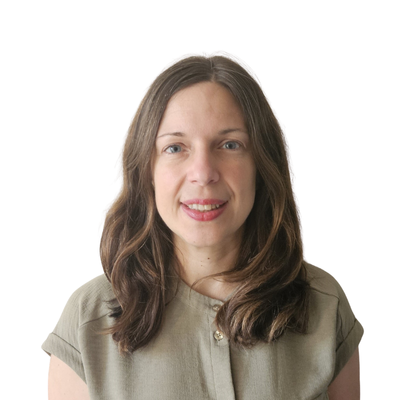
Dr. Maria Marioli
Principal Scientist – Group Lead
Maria Marioli is a Principal Scientist and Group Lead in Nanomedicine at Ardena. With over 15 years of experience in analytical chemistry and pharmaceutical development, Maria specializes in the characterization of complex drug products, including nanomedicines and biologics. Her expertise spans advanced liquid-phase separation techniques, building on her foundational research in field-flow fractionation coupled to light scattering detectors (DLS, MALS) for the characterization of macromolecules and nanoparticles, and the development of robust analytical methodologies essential for drug product development.ment. Throughout her career, Maria has held key scientific roles at Roche and Teva Pharmaceuticals before joining Ardena, where she now leads research efforts in nanomedicine. She is a member of the NANO working party of EDQM and in this role she is supporting the development of relevant chapters and monographs of the European Pharmacopoeia. Maria holds a Ph.D. in Analytical Chemistry from the University of Amsterdam and continues to drive innovation in the field, with recent work focusing on advancements in AF4 – DLS detection for pharmaceutical applications. Recent Publications Resolving measurement artifacts of field-flow fractionation coupled to conventional dynamic light scattering detection by using phase and spatially-resolved dynamic light scattering to improve size accuracy (Full article published in: Journal of Chromatography A (2026) Deciphering the complex characteristics of nanomedicines (Published in: La Vague magazine by A3P (2025)) Analytical characterization of liposomes and other lipid nanoparticles for drug delivery (Published in: Journal of Pharmaceutical and Biomedical Analysis (2020))

Dr. Mark van Eldijk
Vice President, Science and Technology
Mark van Eldijk is Business Unit Director of Nanomedicines at Ardena. He combines scientific expertise in nanomedicine development and nanoparticle technologies with experience in strategic leadership, business development, and pharmaceutical CMC. Mark joined Ardena in 2016 as a Scientist and Project Leader before transitioning into business development and later into his current leadership role. At Ardena, he leads multidisciplinary teams focused on the development and manufacture of innovative nanomedicine products, including lipid-based, polymeric, and metal-based nanoparticles carrying a broad range of therapeutic payloads such as cytotoxics, oligonucleotides, mRNA, peptides, and proteins. His expertise includes nanomedicine development, polymer chemistry, nanoparticle characterization, customer relationship management, and pharmaceutical development strategy. Mark obtained his PhD in Bio-organic Chemistry from Radboud University Nijmegen, where his research focused on the design and preparation of biopolymer-based nanoparticles. He subsequently worked as a postdoctoral research fellow at the California Institute of Technology and has authored more than 20 peer-reviewed scientific publications.
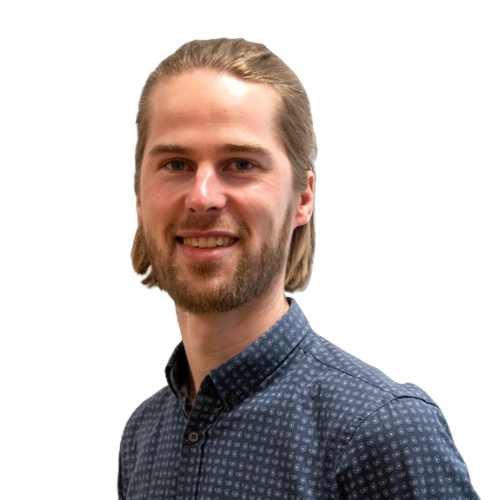
Bastiaan Buddingh
Principal Scientist / Business Development Director
Bastiaan Buddingh’ is a nanomedicine expert with international training from Eindhoven University of Technology and UC Berkeley. He earned his PhD developing lipid- and polymer-based nano and microparticles, followed by research in emulsion-based drug delivery and microfluidics. He then joined a biotech start-up in Paris to develop diagnostic microparticles based on nanotechnology. Currently, Bastiaan is Principal Scientist and Business Development Director at Ardena, a leading CDMO with a strong track record in nanomedicines, where he helps advance investigational drugs to the clinic using his expertise in nanoparticles and bioconjugation strategies.