


Metal nanoparticles
Metal and metal oxide nanoparticles are reshaping advanced drug delivery systems and medical devices with their unique properties and versatile platforms for targeted interventions and diagnostic imaging.
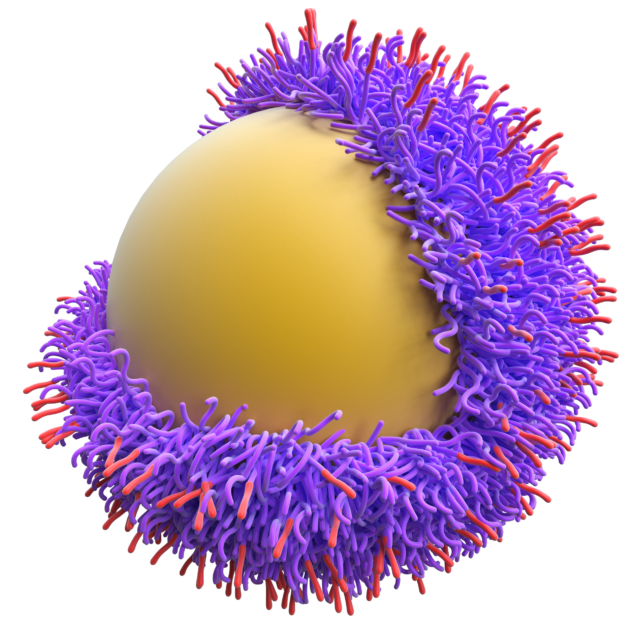
Pioneers in advanced drug delivery and diagnostic imaging
In the dynamic landscape of nanomedicine, metal-based and inorganic nanoparticles emerge as pioneers, reshaping the possibilities of advanced drug delivery systems and medical devices.
Engineered from materials such as gold, silver, iron oxide and silica, inorganic nanoparticles bring a unique set of properties to the forefront of nanomedicine. These nanoparticles offer a versatile platform for targeted drug delivery, diagnostic imaging and therapeutic interventions.
Inorganic nanoparticles frequently have their surfaces coated with a broad range of organic small molecules or polymers, which provide biocompatibility, enhanced stability and opportunities for specific surface functionalization chemistry and introduction of active payloads and targeting handles.

01
Why Inorganic Nanoparticles
Why use metal and metal oxide nanoparticles?
The application of inorganic nanoparticles provides access to unique physicochemical properties such as high surface area per unit volume and unique optical and magnetic properties.
Inorganic nanoparticles can be functionalized with various specific ligands to enhance their affinity towards target cells or molecules.

02
Process Development
Our expertise in metal and metal oxide nanoparticle development
We bring deep hands-on experience in the synthesis and process development of inorganic nanoparticles across a broad range of materials — metal and metal oxide nanoparticles, silica and silicate-based systems, and other emerging modalities. Our team works closely with you to design the right system for your therapeutic goal and target indication, and to take that design from laboratory-scale synthesis through to scalable, reproducible manufacturing. Surface functionalization, coating chemistry, payload incorporation — all developed and characterized under one program.

03
Analytical Development
Our analytical expertise
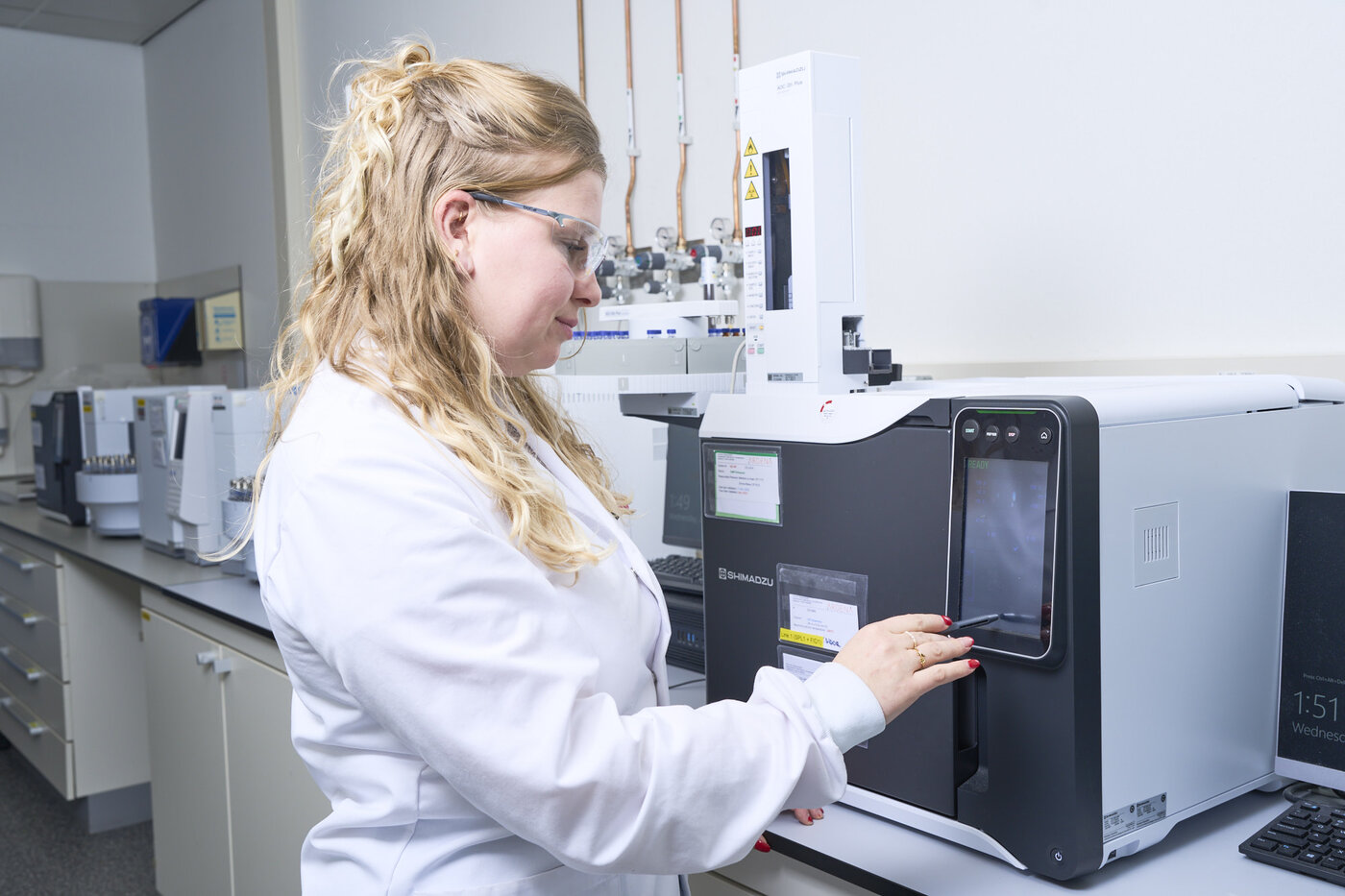
Our analytical team brings specialist expertise in the characterization of metal and metal oxide nanoparticles — from the inorganic core through surface coatings and encapsulated payloads. We quantify and characterize the inorganic components, polymer or lipid coatings, and APIs including small molecules, oligonucleotides, and peptides. Orthogonal techniques for particle size distribution, morphology, surface charge, and magnetic properties ensure thorough characterization aligned with regulatory expectations.
- Appearance: Visual
- Identity: FT-IR
- Identification and quantification of (encapsulated) API and related impurities:
- Small-molecule drugs: LC-UV/CAD/MS
- Peptide/proteins: LC-UV/MS, AAA
- Oligonucleotides: IPLC-UV/MS, RiboGreen
- Quantification of inorganic components: AAS, ICP-OES
- Quantification of organic carbon: TOC
- Magnetic susceptibility: Magnetic balance
- Particle size distribution: DLS, AF4/SEC-MALS, TEM
- Morphology: AF4/SEC-MALS, TEM, XRD
- Surface properties: ELS (zeta potential)
- Elemental impurities: ICP-MS
- Residual solvents: GC-HS, GC-FID/MS
- Solution properties (pH, osmolality), in vitro release, microbiological control: USP/Ph. Eur.
We stay at the forefront of advances in inorganic nanomedicine analytics — and we collaborate directly with your team to understand what your specific program requires, not just what a standard platform can deliver.
04
Our Experience
Ardena expertise and success stories
Our commitment to excellence is evident in our successful track record with inorganic nanoparticles. Ardena has played a pivotal role in advancing numerous projects, including:
A Tailored synthesis of iron oxide nanoparticles
Thermal decomposition and coprecipitation synthesis processes for iron oxide-based nanoparticles, including engineered polymer coatings for stability, hydrophilicity and further functionalization with a wide range of payloads.
B Advanced functionalization of noble metal nanoparticles
Surface-stabilized noble metal (e.g., gold) nanoparticles incorporating a variety of stabilizing and functionalizing chemical modalities.
C Precision generation of silica-based particles
Stöber processes for the generation of silica-based particles of various sizes with further opportunities for surface modification and loading strategies.
Related resources
Our expert team members share their deep, scientific understanding and insights into nanomedicine development and manufacturing.
-
Case studies
Proof of Structure: A Multi-Technique Approach to Elucidate and Confirm Molecular Identity
Read more -
Podcast
From Nanoparticles to Patients with Mark van Eldijk
Read more -
Podcast
Welcome to We Know Development™: The Human Side of Drug Development
Read more -
Whitepapers
The Strategic Value of In-House Delumping for Homogeneous API Production
Read more -
Case studies
Accelerating Amorphous Solid Dispersion (ASD) Selection for Poorly Soluble Drugs: A 4-Week Screening Workflow
Read more -
Info sheets
Secondary Packaging Built for Complex Clinical Trials
Read more -
Info sheets
Flow Cytometry with Ardena: Bespoke, Backbone and Built
Read more -
Case studies
Enabling Complex Phase IIa Dosing Through Flexible Clinical Packaging Design
Read more -
Whitepapers
Advancing Pharmaceutical Production: The Benefits of Flow Manufacturing for Nanomedicines
Read more